In 2022 I read Nicolas Cole’s book The Art and Business of Online Writing and loved one of his core ideas:
Write on platforms where people actually are, instead of your own website. If you publish on your blog, nobody’s reading. These platforms also want to share your content, so you’ll get a natural boost in readership if it’s popular too.
So over at least 3 years (!) I experimented with this. Yes I was a fool – I went all in. I moved and published all my content on social platforms: Quora, Reddit, Medium, Substack, Twitter and LinkedIn articles 🤦.
And as you may expect I now look back and regret it.
So with a lot of people swinging to Substack lately, I thought I’d write down some thoughts and data on this in case it gives some interesting context.
The organic numbers
On LinkedIn, a lot of my articles got about 40ish views.
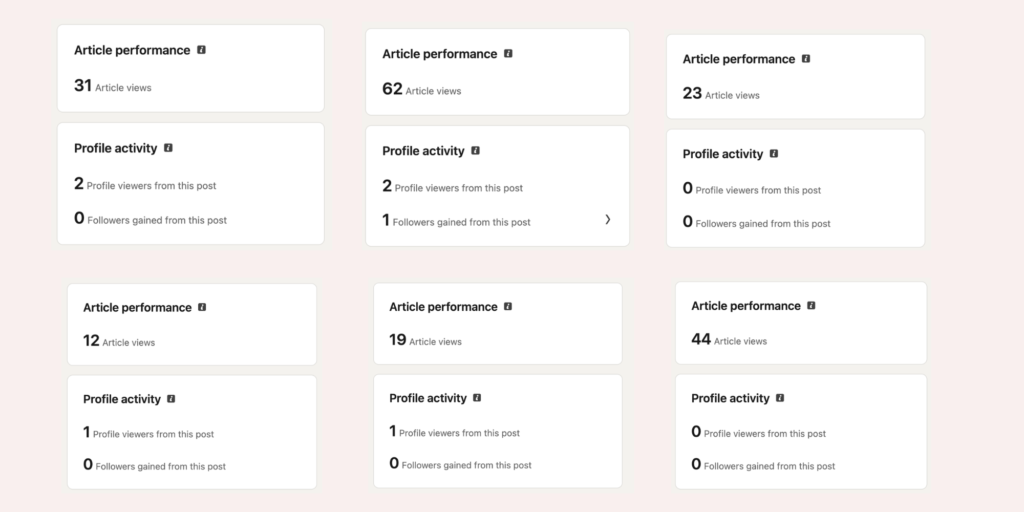
To be fair, I write a lot about Meta ads there, so it’s not that interesting. I assumed it would get in front of at least a few folks with an interest in the topic, but in the end not much.
For Medium, there wasn’t any traffic from the platform itself. I directed folks there naturally from Reddit.
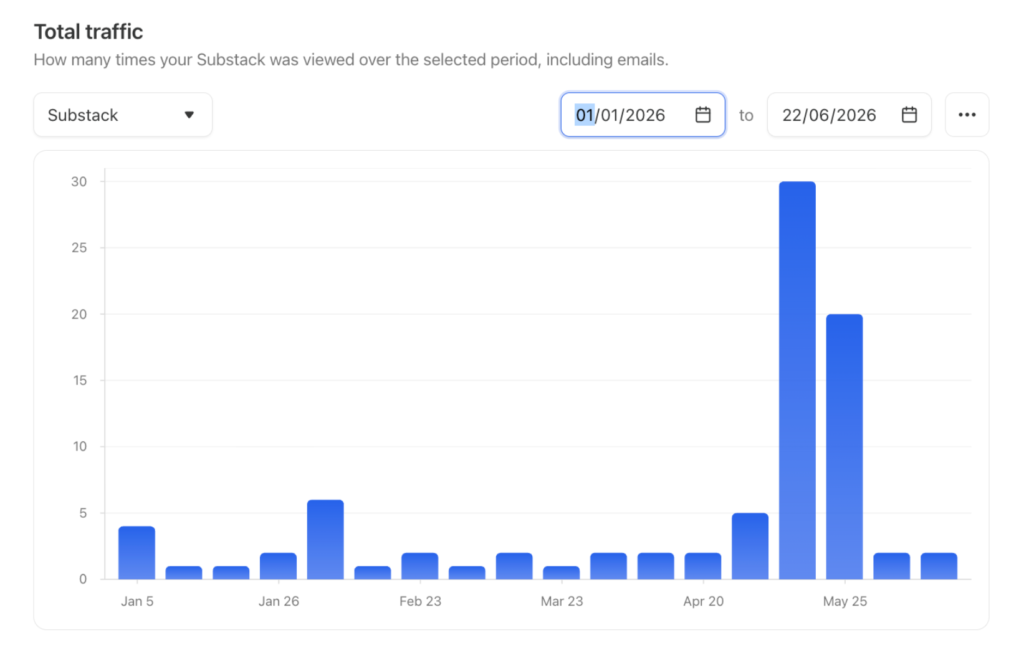
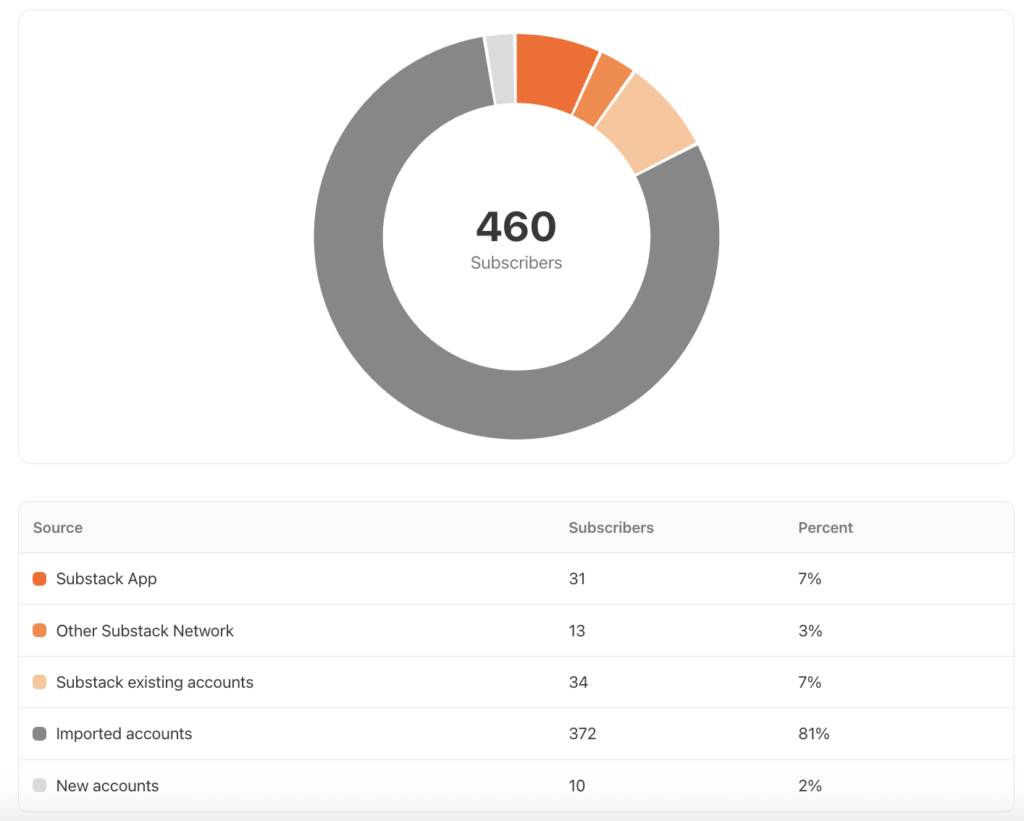
Substack was decent, in that I got referrals from my friends’ newsletters, building my list by about 100 folks, so I’m pretty thankful for that.
On Reddit, I made a write up about my digital minimalism experiment, which I posted to the digital minimalism subreddit for about 40,000 views.
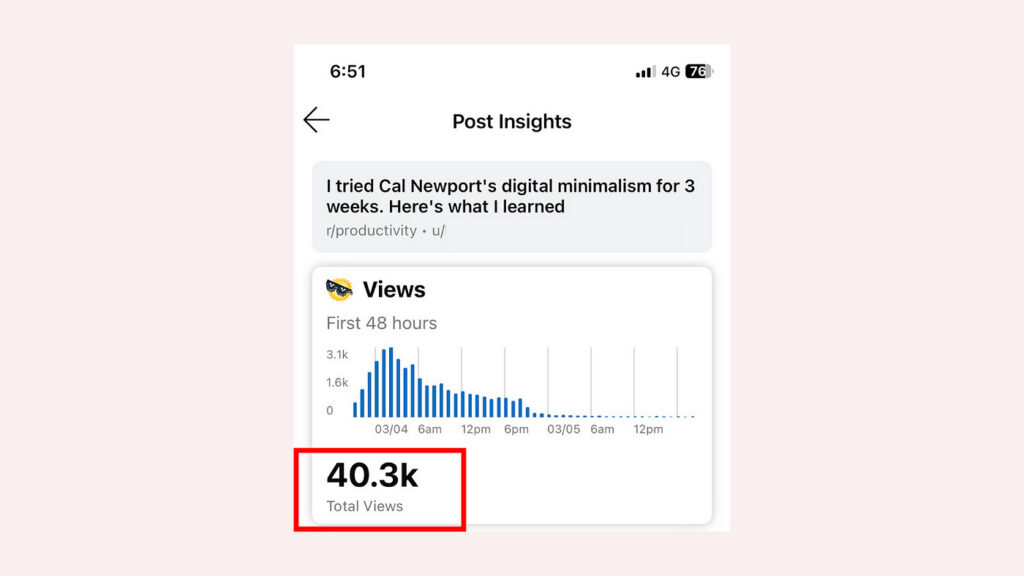
But that lived on the platform. So I got the views and nothing really came of them.
The drawbacks
I think the Reddit post was the eye opener in retrospect.
If you’re going to get someone’s limited attention, you might as well foster that attention on your own page and not on a social one.
- Firstly these platforms didn’t really let me add much in the way of conversion modals, so it’s harder to encourage people to become email subscribers. And secondly, my content was competing with everyone else’s content pulling their attention away.
- Getting 40 views from a platform doesn’t really move the needle, so I needed to promote the content anyway. But if I’m going to go to the effort of drawing people in, wouldn’t it be a little less effective driving them to a social page?
- Then there’s the links and comments. Each time I post or link or comment or try to ferry people to my work, they’re tiny deposits that add up over time. But if these platforms shift and I need to move my work elsewhere, those links break. I can’t 301 redirect them either. With my own site I can at least use the redirection plugin on WordPress.
I shudder to think how many little links, mentions etc I lost from these past 3 years that could have stacked up. All those great comments from friends and strangers that are lost, too.
- Another drawback was the trends of the platforms themselves. Over time I noticed people started thinking of anyone who uses a platform, like Twitter or Substack, a certain way, and that changes. Rather than as human beings who just happen to use social media. Which I see as a bit of a risk if you’re going to build your castle there.
Which is related to the worst drawback. Getting sucked in.
- Twitter pulls you into news and politics. LinkedIn has a lot of cringe content. Reddit has rabbit holes. Etc. To keep my profile engaged for a little smattering of traffic, I was active on these platforms, but they’re designed to distract me with rot and outrage. Not a good ROI on time or mental bandwidth.
So ultimately I think I would have been better off keeping everything here from the start. Just slowly building up those tiny deposits, and better leveraging whatever attention I managed to draw to my work here.
What I’m doing now
I’m not saying Nicolas Cole’s idea was wrong. His point is obvious. Nobody is sitting around reading a blog unless you’re famous, and the data supports the idea that platforms already have the readers.
But I think he has a more powerful point in the book, which is that we’re not trying to build a blog. We’re building a portfolio of content, informed by data (which tells you what to write more or less of), that can be redeployed on any platform depending on what’s in favour with the algorithms at the time.
And I think I still get all of that with it on my own site. Yes, I’m still directing people back here to get anyone to read, but I’d have to do that anyway publishing on social platforms. Being on the platforms and writing on the platforms turned out to be two different things.
This has also made me realise that my email list using Kit (link) was doing most of the real work courting readership. So I’m changing how I use it, testing sending the whole post in the email rather than as part of a round up, with a click through link to read it online if people prefer.
For now I’m taking everything off LinkedIn and Substack and reposting it here. I’ll still be on the platforms to share links back here, read and chat with people, but not trying to push them as home base for long-form content.


