I’ve often heard among other non-Thais that learning to tell the time in Thai is confusing. Especially the evening hour system of 1-5 thum (ทุ่ม).
So I thought there must be some logic to it. Why is the day split up so uniquely?
I did some quick research, and it turns out there is. And it helps with memorisation, too!
Firstly, I found out those confusing night hours are based on 1-5 strikes against a drum called a klong (กลอง). It’s a barrel-type leather drum. So naturally, the sound “thum” also helps with memorising those hours.
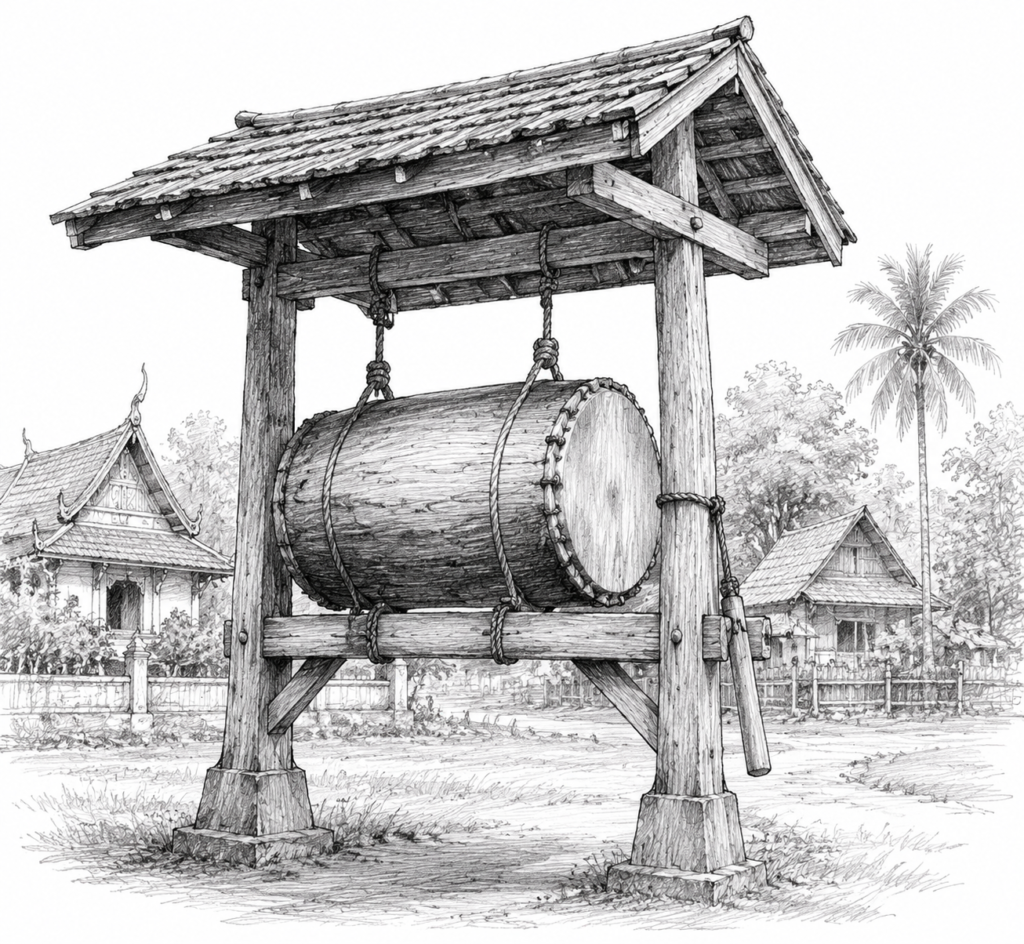
Finding this out sent me down a rabbit hole wondering about the other times and their reasons.
It actually comes together nicely like this:
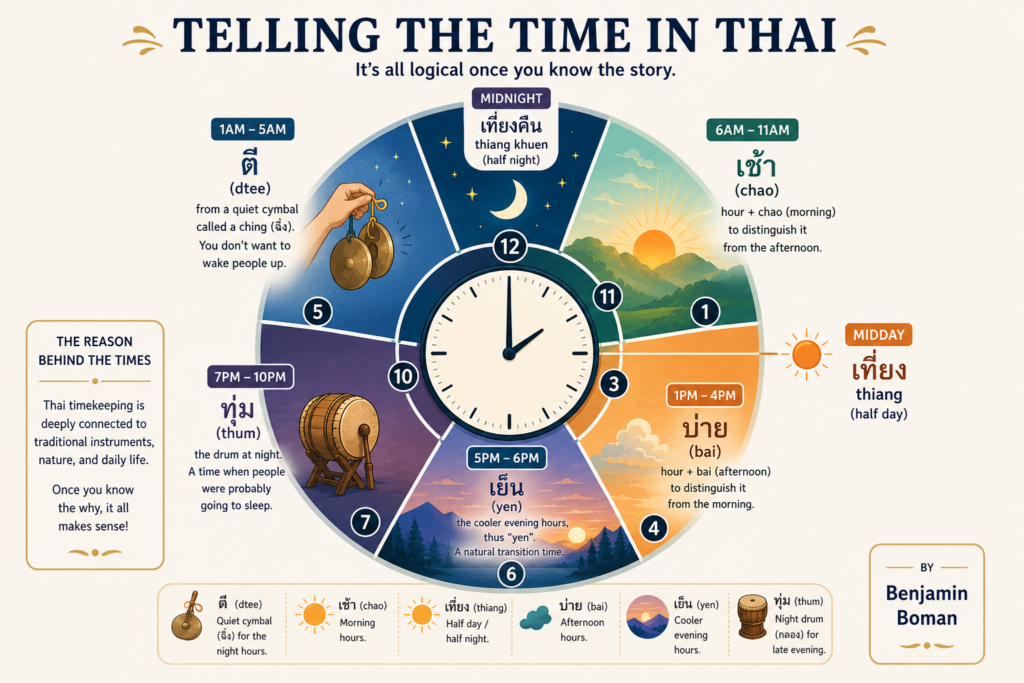
- Midnight: thiang khuen (เที่ยงคืน), literally “half night”.
- 1am to 5am: dtee + number(ตี), from a quiet cymbal called a ching (ฉิ่ง). Makes sense, you don’t want to blast something noisy and wake people up during those hours.
- ตี also means to hit.
- 6am to 11am: number + hour + chao (เช้า means morning), just to distinguish it from the afternoon.
- Midday: thiang wun (เที่ยง), literally “half day”.
- 1pm to 4pm: number + bai + hour (บ่าย, afternoon), just to distinguish it from the morning.
- 5pm to 6pm: yen + hour + number (เย็น), the cooler evening hours, thus “yen”. Makes sense mentally as a time you’d give a different name to.
- 7pm to 10pm: number + thum (ทุ่ม), the drum at night. Imagine the drum being used, though I remember it as the time when people were probably going to sleep.
Here’s a quick infographic.
From that point of view, the times are much easier to remember.